
You Made ALL The Right Decisions. How Did You End Up Here?
How reasonable, intelligent people end up in situations they never wanted
Burnt Out? Stuck? You're Not Broken
–
Find Your Discernment
–
Click Here To Work With Me
–
Burnt Out? Stuck? You're Not Broken – Find Your Discernment – Click Here To Work With Me –
“OK, but really. Where did I go wrong?” Josh asked.
It was a Wednesday in April, in the middle of an oppressively hot fake-summer day in New York City. Too early for the buildings to switch over from winter heating to air conditioning—and rightly so; the mercury would drop fifty degrees within the next week.
Even through Zoom, I could hear the tumult of sirens that serves as the soundtrack to this city, blaring through Josh’s open windows. I’m sure he could hear the ones coming through mine, if, that is, he could get past the white noise from the two fans I had pointing at my face.
“Where did I go wrong?” he said again.
PS. If you find yourself identifying with Josh, you’re not alone. Click the button and let’s talk:
I asked Josh to describe what the rest of his week looked like. I wanted to get a sense of what “wrong” meant for him.
He described six one-on-ones that afternoon, a budget review on Thursday that he couldn’t motivate himself to prepare for, and then an offsite planning meeting he’d been dreading on Friday.
What struck me most about Josh’s mien was how unmoved it was. His affect was as unvarying as a salt flat. Ten years into a career he thought he’d love, one he’d been pursuing with single-minded devotion. The CV looked great. The LinkedIn looked even better.
And he…looked deflated.
I then asked him if he could remember the last time he did work that felt like it was his. “I mean, this is my work,” he said, not quite following.
“Being good at something isn’t a reason to do it,” I said. “Countless people wither in jobs they’re good at.”
When, I wanted to know, was the last time that he did work that came from some recognizable inner thing? His answer was a bit wan and noncommittal: “I’d say it was maybe this white paper I wrote in 2021.” He was tired then too, he said, but it was a different kind of tired. It was an energized tired; now he opens his journal in the morning and literally cannot remember whether it’s Tuesday or March.
Josh fences—the kind with swords. By his own admission, he’s a “deeply mediocre” fencer. But, friends, you should have seen how his face changed when I asked which weapon he used and why. The balloon inflated, rain fell on the salt flats. He waxed philosophical about why he loved the saber.
If you’ve been reading this blog for a while, this is the part of the story where you might expect a crisis. But in Josh’s case, there isn’t one. There isn’t a back-breaking straw, a final deadly paper cut. His marriage is fine, even good. His kid is fine. His boss likes him. He makes more money than he thought he would.
The horror, weird as it sounds, is that nothing was wrong, but he still couldn’t shake the sense that he was living inside a life that belonged to a different person—to someone who made choices on his behalf, years ago, without actually consulting him.
Before we go on… Are you stuck on some big decisions? Let’s talk ↓
The Reasonableness Trap
Walk backward with me for a second.
Three years ago, Josh was promoted to his current Senior Director position. Unlike every other career move in his life, he didn’t pursue that promotion. His boss at the time pulled him aside to tell him that the role was opening and that Josh would be perfect for it. At the time, he felt pretty clear: he couldn’t say no.
It would have felt strange. How do you frame that conversation? “Thanks, boss, but I’d rather not”? Besides, the promotion came with a raise, and college fees were fast approaching.
Four years before the promotion, Josh had made a lateral move when his old team got reorganized. He was given a choice between two adjacent departments. One was new, an unknown. The other had stability. He picked the second.
Even further back: Josh had joined his company in 2017 because a friend from grad school referred him. He’d been at his first post-grad-school job for five years by then, which felt like a long time. The new role felt like a step sideways in responsibility but a step up in title. He remembers thinking the new company would be a good place to spend two or three years, a “platform job” he called it.
Similarly, his first-ever job out of grad school was also supposed to be temporary. He’d applied to it the way you apply to things when you’re 26 and the rent is due. Once his dream job had turned him down, he approached every other application with a strategic shrug.
He just needed something to get him on his feet, place he could work for eighteen months, save some money, and then move on to the cooler stuff.
Also, he lives in this city because his husband’s job was here when they got serious. His husband took the NYC job to be closer to Josh when Josh was at his first job, the temporary one. So the city is the result of his husband’s career, which was the result of Josh’s career, which was the result of an eighteen-month plan he made when he was in grad school.
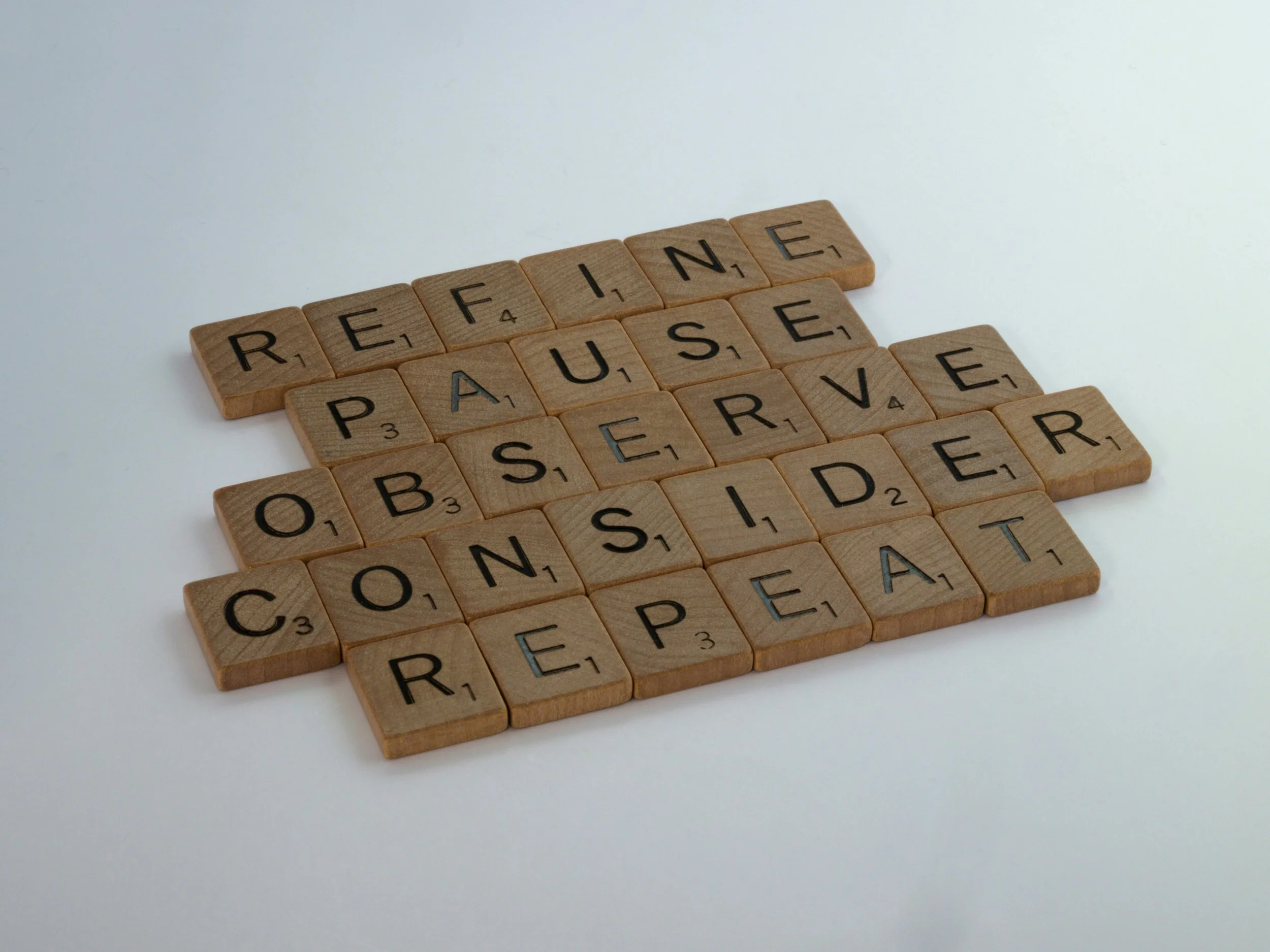
Breaking the Reasonableness Trap. Photo by Brett Jordan on Unsplash
Josh made all the right decisions. Never once, in this entire decade and a half, did he make a bad decision. He took the next right step every time—and he’s somehow never ended up doing “the cooler stuff.” He can barely talk about “the cooler stuff” any more because it feels so out of reach. Like a ship has sailed and he didn’t even know the anchor had been taken in.
Each of Josh’s choices, each of his husband’s, taken on its own, was reasonable. The promotion made financial sense. The lateral move was the better of two options. The city was where his partner had work. The first job paid the rent. If you handed any one of these decisions to a thoughtful person and asked them to evaluate it, they’d probably agree with every single one of them.
And yet here we are, on a blisteringly hot Wednesday in April, talking about a calendar full of meetings Josh never wanted, in a job he feels like he didn’t actually choose, in a city he ended up in because of a man whose location was determined by a choice that he made before he even knew him.
There’s a name for what happened to Josh, a scientific concept called Path Dependence.
Which brings me back to Josh’s first question: “OK, but really. Where did I go wrong?”
Nowhere. Josh isn’t lazy, weak, self-sabotaging, conflict-avoidant, insufficiently ambitious, or anything else he’s been told to think. He is, by any reasonable measure, a thoughtful person who’s made a series of thoughtful choices.
The problem is that the choices were made one at a time, in sequence, each one constrained by the last. Every step was small and defensible. Every step built on the one before it.
On that hot April day, Josh is, in a sense I want to be precise about, downstream of himself. The Josh making decisions today inherited his circumstances from the Josh who made decisions five years ago, who inherited his from the Josh of ten years ago, who was working with what twenty-six-year-old Josh had handed him.
At no point (yet!) did any one of those Joshes sit down to ask: is this the life we’re building? The question never came up because each individual choice felt too small to warrant it.
So the question isn’t what went wrong. Nothing went wrong. Everything went right—and a decade and a half of compounded Rights turned into one big Wrong.
That’s what the next two weeks at Solving for Why are about.
How does this happen to thoughtful, intelligent, high-achieving people? And how do you get out?
Next week: the science of path dependence and the reasonableness trap. And the week after, to close out the first half of 2026, the antidote.
See you then! In the meantime, leave any decision questions you have in the comments below.
Facing a consequential decision?
You don’t have to navigate it alone. Work with a decision coach who knows how to guide you to a life you’re madly in love with again.
→ Check out my packages here. They range from 4 weeks to a year, and they take you from “what the heck do I do next?” all the way to clarity and a step-by-step plan that honors both your calling and your right to thrive. Click here to apply!
→ Want more FREE weekly content about making consequential life choices with confidence and clarity? Join my mailing list!
Double-click to edit...