
A Decision-Making Framework for Life’s Hardest Choices

Some decisions change the whole shape of a life:
Whether to leave a career, take the offer, end a marriage, start a new relationship, or move across the world.
These are the choices that can paralyze even the most capable, decisive people, because the usual ways of making decisions stop working in the face of choices this consequential.
That’s why I created a structured process for tackling life’s decisions—the big ones and the small ones. This framework is drawn from the science of decision-making and from my years of applying it to consequential decisions, for myself and for my clients.
Learn how Dr. Mark applies this framework with clients facing consequential career and life decisions.

Why Big Decisions Feel So Hard
You aren’t bad at decisions.
You’ve just never been given the tools to make them. Big, consequential decisions resist the tools that work everywhere else in your life. Consequential choices get tangled in ways that smaller decisions don’t. They impact uncertainty, future, purpose, timing, finances, and other stakeholders. They demand being made in the absence of full emotion, and they’re colored by emotions that distort how you read them.
Most of us respond by thinking harder, making pro-con lists, and waiting for a flash of clarity that, unfortunately, never shows up.
And that’s because clarity isn’t a prerequisite for decision-making. It’s an outcome of a good decision-making process.
Better decisions come from a better method for making them. When you’re able to create a personalized, replicable process for tackling hard questions, you untangle the knot and transform it into a sequence of very tractable, very answerable steps.
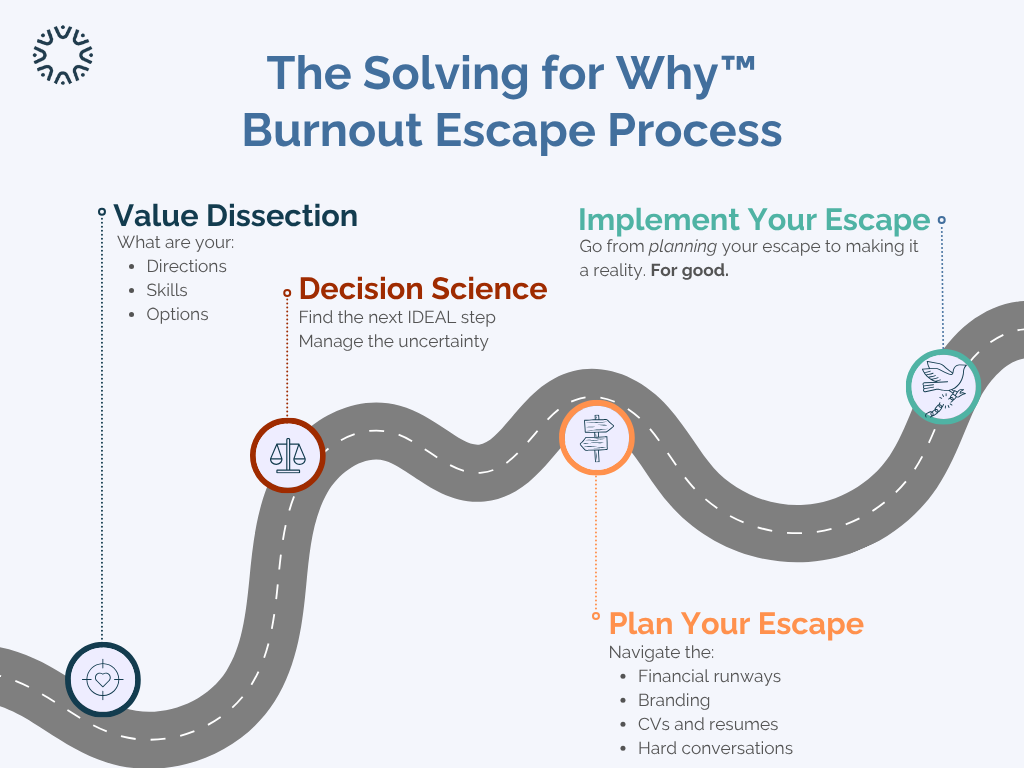
The Six-Step Decision-Making Framework
Navigating any big decision starts with the Why: What are you trying to solve, what objectives are you trying to achieve, and (crucially), how do these objectives trade off against each other?
Second, we tackle the What: What is your full option set? What are the choices you know you have—and what are the ones you haven't thought of yet?
Third, the Rubric: How do you actually want to approach the decision itself? Are you inclined to choose based on upside benefit? Downside risk? Regret? We build that into your decision, so that the choice you finally make is true to you.
Fourth, the Who: Who are the stakeholders? Which of those is a true co-decider and which needs simply to be consulted? And how do we deal with naysayers?
Fifth, the How: A decision is only as good as the action that comes after it, so we delineate that action and build a plan to effectuate it.
Finally, the When. There will never be a perfect time to pull the trigger. But there's a scientific way to figure out the best time to do it anyway. Deciding not to act is, after all, a decision with its own consequences.
Learn how Dr. Mark helps clients work through consequential career and life decisions using this six-step process.
Why This Framework Leads To Better Decisions
Working through these six steps changes your relationship to the decision itself.
The first thing to relax is the overwhelm. Instead of a complicated morass of interlocking parts, the decision is broken down into questions you can actually reason your way through. A choice that once felt too big to hold is dissected into pieces you can actually examine, one at a time.
And that overwhelm is replaced with confidence. Not certainty—every decision is uncertain—but a confidence that you know what to do with uncertainty.
We rarely find absolute certainty on the choices that matter most, and waiting for certainty before making a decision costs a lot more than it’s worth. Confidence, instead, comes from knowing that your reasoning was sound, that you articulated your objectives, weighed the trade-offs, and chose in a way that reflects who you are.
And because this is a process rather than a one-off answer, you get to keep it. The next time you’re facing a consequential choice, you have a ready method for tackling it
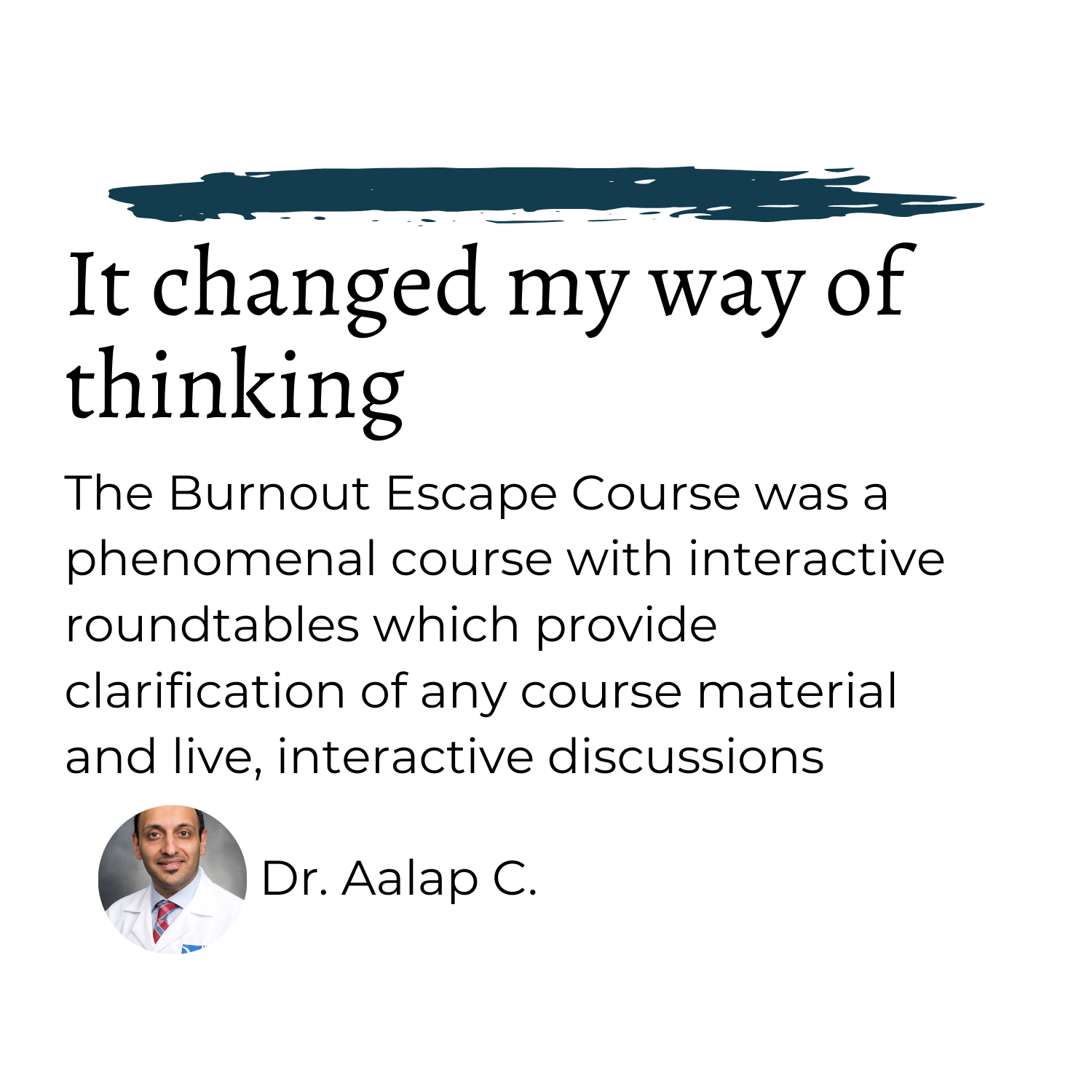
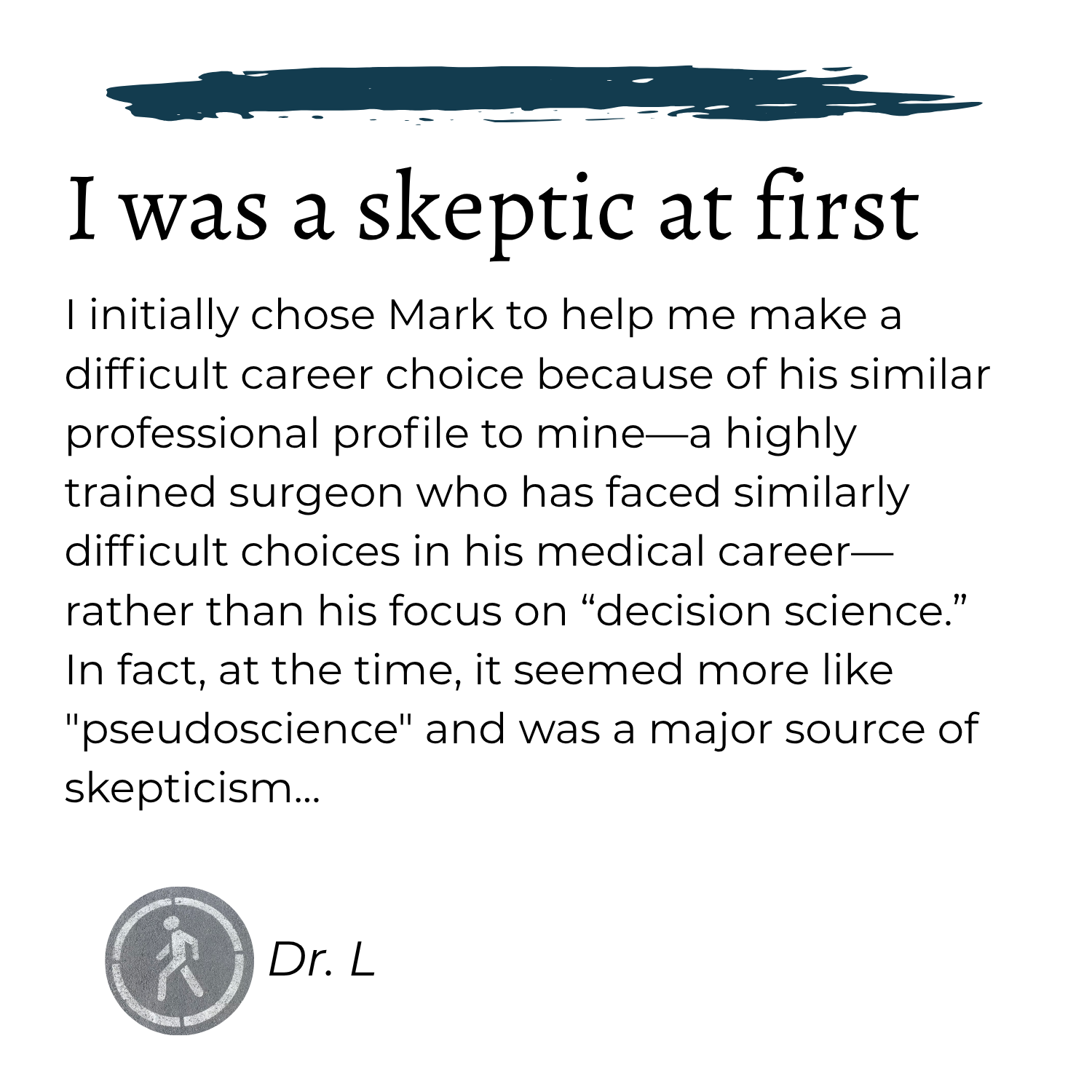
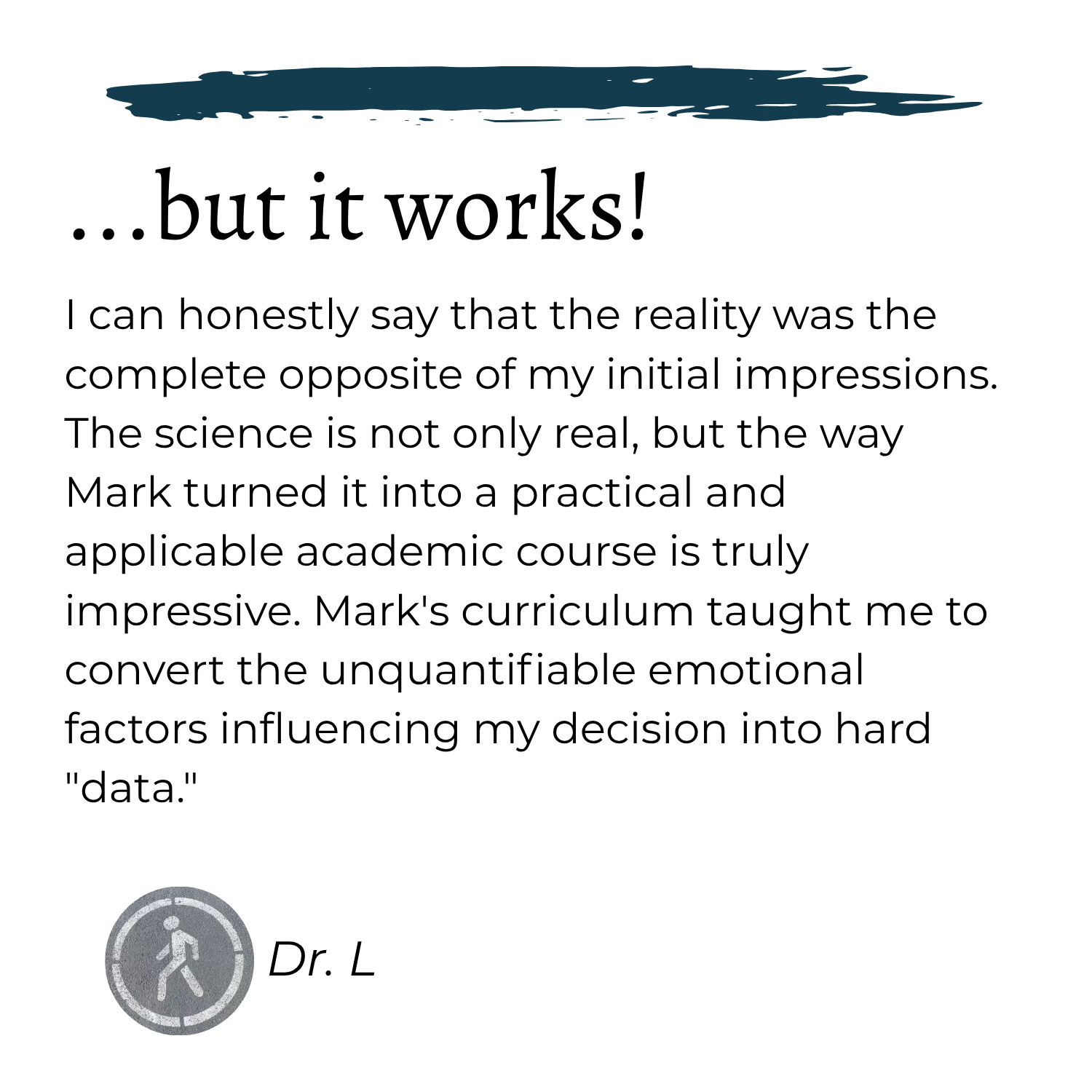
What Others Are Saying…




Work with Dr. Mark Shrime

Dr. Mark won't tell you what to choose. That's the point.
The right decision is the one that fits your objectives, your trade-offs, and your tolerance for risk and regret.
What Dr. Mark brings is the process. With a PhD in the science of decision-making from Harvard and a career applying formal decision analysis to choices made under extreme uncertainty, he guides you through each of the six steps with rigor tailored to your situation.
You leave with a decision you understand, own, and can defend to your future self.
Facing a consequential career or life decision? Start with a conversation about what you're trying to solve.
Dr. Mark Shrime has been featured in…







Decision-making framework FAQs
What is a decision-making framework?
1
A decision-making framework is a structured method for working through a choice, rather than a formula that spits out an answer. It breaks a complex decision into defined stages—clarifying objectives, expanding options, weighing trade-offs, and planning action—so you can reason through each part instead of holding the whole tangle in your head at once.
How can a decision-making framework help with complex life or career decisions?
2
The hardest life and career decisions are hard because they combine uncertainty, emotion, and competing priorities. A framework separates those threads so you can address them one at a time, which turns a paralyzing question into a series of answerable ones and helps you move forward without waiting for a certainty that never arrives.
How do I know if I'm making the right decision?
3
On the decisions that matter most, you often can't know in advance, because the outcome depends on a future you can't see. What you can know is whether your process was sound: whether you understood your true objectives, considered your full option set, and chose in line with your values. A good decision is one you'd make again with the same information, regardless of how it turns out.
Can a structured decision-making process ease my uncertainty and regret?
4
A structured process won't erase uncertainty completely, but it does reduce the paralysis that uncertainty causes and helps you act at the right time rather than freezing. It reduces regret by ensuring your choice reflects what you actually value, so you can stand behind it even when the result is disappointing.
A pro-con list treats every factor as roughly equal and ignores how your priorities trade off against each other, how much weight to give an uncertain future, and who else has a stake in the outcome. It may list out the pros and cons, but it doesn’t tell you how to balance those against each other.
This framework accounts for all of that, and it extends past the choice itself into how and when to act—which a two-column list never touches.