
Analysis Paralysis Explained: What Causes Decision Paralysis Anxiety?
You’ve experienced it. But why? What causes decision anxiety?
Burnt Out? Stuck? You're Not Broken
–
Find Your Discernment
–
Click Here To Work With Me
–
Burnt Out? Stuck? You're Not Broken – Find Your Discernment – Click Here To Work With Me –
In 1955, Herbert Simon broke rational-choice economics. Until his work, the prevailing model for decision-making assumed a hypothetical “rational” decision-maker, who has complete information and zero emotion. The decision-maker would thus be able to survey every option, assign each option a precise, dispassionate, happiness index, and then select the option that provides the maximum happiness.
Simon objected: no one actually works like this.
And that’s because no one has unlimited time, information, or even the computational capacity to make decisions like that. He proposed, instead, that humans operate under bounded rationality and mostly satisfice—we search until we hit an option that clears a threshold of "good enough," then stop.
Understanding this can be especially helpful for people struggling with decision paralysis anxiety, where the pursuit of the perfect choice keeps them stuck long after a sufficiently good option is available.
The difference between “good enough” and “perfect” also explains a whole lot about why intelligent, accomplished people freeze in front of decisions that, in reality, they are more than equipped to make.
Let’s talk about decision paralysis—what it is, what causes it, why it’s so anxiety-inducing, and what to do about it.
PS. Not sure if you’re maximizing or satisficing? A coach can help. Read more about decision coaching here:
What Is Decision Paralysis?
Up front: Decision paralysis is the failure to commit to a choice despite possessing the information, capability, and authority required to make it.
In other words, deliberation has stopped producing returns. It can feel like spinning, like “but what if?” or like stuckness. It’ll feel like you need additional analysis, but additional analysis no longer winnows out options. In fact, it introduces new ones.
Iyengar and Lepper's 2000 field experiment remains one of the seminal papers in analysis paralysis. They set up two supermarket tasting booths. At one, browsing customers got to choose among six jams; at the other they had 24.
They found that 30% of shoppers who stopped at the six-jam booth converted, while only 3% of those who stopped at the booth with more options ever made a choice.
Think about that—there was a tenfold collapse in action, driven by nothing but the size of the choice set.
As this field of choice overload paralysis has developed, the types of decisions most susceptible to analysis paralysis have become clearer. Also, a 2010 meta-analysis by Scheibehenne, Greifeneder, and Todd found that this paralysis intensifies with the importance, complexity, and consequences of a decision.
In other words, it’s harder with big decisions.
Decision paralysis, overthinking, and how to get through them: a conversation with Cate Osborn
Before we go on… Are you stuck on some big decisions? Let’s talk ↓
Understanding Decision Paralysis Anxiety
In the early 2000s, Barry Schwartz built his “paradox of choice” idea on findings like this. Across a series of studies, Schwartz and colleagues compared people who maximizers (people who wanted to make the best possible decision every time) with satisficers (people who make a decision that’s “good enough”, like Simon discovered 50 years previously.
Schwartz found that people who scored as high “maximizers” showed an inverse correlation with happiness, optimism, self-esteem, and life satisfaction, and direct correlations with depression, perfectionism, and regret. In other words, maximizers reported less satisfaction than satisficers with the decisions they made.
This is the engine driving decision paralysis anxiety. A maximizer can’t ever confirm that any one option is the best without a comprehensive audit of all the other options. But the alternatives are unbounded, so the audit can never close. Which means the decision can’t ever be settled.
But wait, there’s more.
Your brain has a hard time letting go of unclosed loops. It’s called the Zeigarnik effect (named after a Soviet psychologist Bluma Zeigarnik), and it describes the tendency of incomplete tasks to keep claiming cognitive resources until they’re discharged. Then, and only then, does your brain set them aside.
For a high performer whose self-concept is organized around optimization—around being the one who finds the best answer—every consequential choice can feel like a referendum on your own competence.
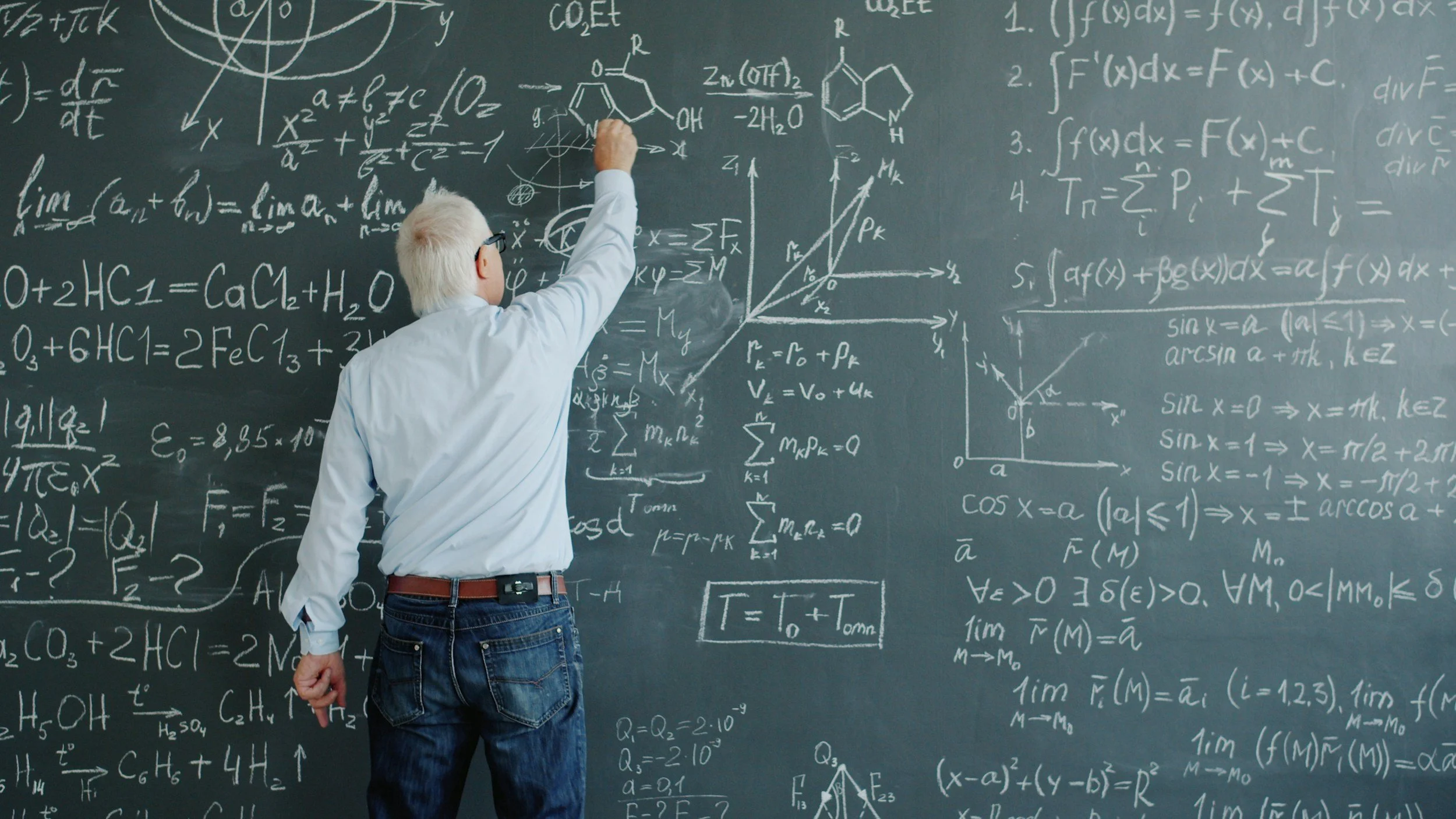
What decision-making feels like sometimes. Photo by Vitaly Gariev on Unsplash
Why Anxiety Makes Decision-Making So Difficult
That’s how decision paralysis causes anxiety. But anxiety itself can then wrap back around to cause paralysis.
To understand how, we’ve got to bring in just a little more decision science. That same hypothetical rational decision maker that Simon rejected—the one with infinite information, and infinite time to make a decision—also makes another assumption not supported by reality: positives and negatives count the same.
The fact is, that’s not true. We view positive outcomes differently from negative ones—by almost two-fold. Specifically, losses loom larger than equivalent gains by a factor of roughly two.
When the decision is consequential—when the variables at stake are income, reputation, and identity—then any risk of loss is inflated two-fold against the status quo, which receives an unearned discount.
That is, inaction starts to feel better and better compared against the risk of loss that any change requires, even when, on the actual merits, it might carry a higher actual cost.
This establishes a vicious, self-reinforcing loop. Anxiety raises the perceived cost of error; the elevated cost makes any commitment feel premature; then the absence of commitment keeps the loop open, sustaining the anxiety.
And the thing that has worked for your decisions at work—analytical horsepower—can’t interrupt the cycle. In fact, it accelerates it, because the sharper the mind, the more sophisticated the options it manufactures, and each option becomes another reason to keep thinking.
Decision Paralysis in Careers, Leadership, and ADHD
Before we talk about how to overcome decision paralysis, I want to take a small detour into neurodivergence, specifically in ADHD.
Differences in executive function, task initiation, and emotional regulation make decision-making especially effortful at baseline. Layer onto that the analysis paralysis we’ve just talked about, and the friction can feel like it becomes insurmountable.
How to Overcome Decision Paralysis
Decisions are inherently uncertain. And the reflex of an analytical mind facing a stalled decision is to gather more information. It’s to maximize.
But the problem is, for many such decisions this is the wrong instrument, because the problem is, the stuckness is not informational. More information won’t make it any clearer. Instead, try this:
Adopt a satisficing standard for the decisions consequential decisions.
This feels wrong. It feels like you shouldn’t just make a “good enough” decision for the big decisions. But the research is consistent that relentless pursuit of the optimum produces worse outcomes than a disciplined search for "good enough." For a high-consequence, low-reversibility choice, define in advance what the “good enough” threshold is, and then pick the first one that clears it.
Second, distinguish reversible decisions from irreversible ones and calibrate deliberation accordingly. And be honest: most choices are reversible. Even the ones that don’t feel like it—tattoos can be removed; marriages do end; dream jobs can be quit. Reversible doesn’t mean costless; it means reversible. Most decisions have more reversibility than your anxiety implies. Treating a two-way door as a one-way door does nothing more than heighten the anxiety.
Finally, delineate your actual objective. What specific question is the decision answering, what problem is it solving? Many decisions stall because the values underneath them are in conflict and unstated—autonomy against security, meaning against status. Naming the real objective sorts through a set of options that once looked equivalent.
Decision Coaching for People Struggling With Decision Paralysis Anxiety
Therapy is well suited to investigating the underlying reason a decision might feel charged—the history, the trauma, the attachments beneath it. Super important, as always.
But decision coaching is built to find actionable solutions. It’s a method for structuring the choice itself.
Decision coaching applies decision science—the lineage running from Simon through Zeigarnik, and Schwartz—to the specific decision in front of you.
A competent decision coach doesn’t prescribe an answer, because the right answer depends on values that belong to you. Instead, the work is to build the apparatus, the framework that matches your psyche, that helps you specify your real objectives, weigh options against them, correct for the distortions that anxiety and maximization introduce, and arrive at a choice you can stand behind.
If you‘ve been circling the same question for months, more analysis won’t get you out. You’re standing at a decision point without a method to address it. Let’s fix that.
Paralyzed by choice? Over-analyzing?
You don’t have to navigate it alone. Work with a decision coach who knows how to guide you to a life you’re madly in love with again.
→ Want more FREE weekly content about making consequential life choices with confidence and clarity? Join my mailing list!
This article discusses anxiety and mental health in the context of decision-making. If you are experiencing significant distress, consider speaking with a licensed mental health professional.
Double-click to edit...